Sapori dall'Umbria
Typical Umbrian sweet and savory specialties

Sapori dall'Umbria - Assisi
Street Giovanni Becchetti, 7
Santa Maria degli Angeli - ASSISI (Perugia) Italy
Tel. 075.8041298 - Mobile Phone 3336244308
VAT number 02945550545
Not yet optimized for smartphones
© Flavors from Umbria 2021


e-commerce
Liqueurs and Spirits




1 2 › 2
The Orvietan. Macerated medicinal herbs
BERNARDINI LAMBERTO 3116537
LIQUEURS AND DISTILLATES #amaroerboristico, #orvietan, #dal1603, #cumprivilegioregis, #maceratodierbeofficinali, #dal1603orvietan
In Stock
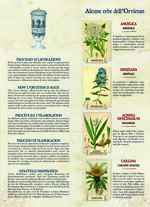
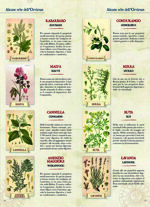
Type: Orvietan is a herbal amaro obtained by macerating over 25 medicinal herbs in a hydroalcoholic solution, hand-pressed with small presses and then filtered through cloth, whose name identifies both the seller and the place of origin.
History: The first to call himself "L'Orvietano" was Girolamo Ferranti, who on June 9, 1603, obtained his license to sell in the public square from the Municipality of Orvieto. The fame of Orvietan reached all the main squares of Europe, winning over both the people and the nobility. Its widespread diffusion is linked to the figure of itinerant medicine sellers. Especially in France, where Cristoforo Contugi, Ferranti's successor and inventor of the sun symbol he would use to wrap his medicine and distinguish it from the many imitations, in 1647 obtained from the Sun King, Louis XIV, a regular consumer, the exclusive privilege of sale which reads as follows: “If one takes even the said Orvietan in the quantity of a pea in the morning on an empty stomach dissolved in wine or hot broth, or in pill form, it will strengthen natural warmth, wonderfully aid digestion, and prevent stomach pains, difficulty breathing, bad breath, and also prevent vapors from rising to the brain, which could cause distillations on the chest.”
The success lasted for about two hundred years, with numerous more or less secret formulas. From 1655, Orvietan was included by Johannes Schröder in his treatise on pharmacopoeia, thus passing the baton to pharmacists who would continue the production of the famous elixir. In fact, in the historic pharmacies of Europe, there are many jars bearing the inscription L'Orvietan. Its fame was further amplified by literature, with numerous references. In the first version of Manzoni's Promessi Sposi , when Fermo was still at Lucia's side, it is Donna Prassede who suggests its use. Orvietan is also mentioned by Molière in the play L’Amour Médecin, implying that it could even cure “lovesickness.” Voltaire mentions it in a story, Leibniz in a letter, and Scott in two novels. And then Balzac and Chateaubriand as well. It became so widespread that until the end of the nineteenth century, in European dictionaries the word “Orvietano” was identified as “famous antidote invented in Orvieto”. At the end of the nineteenth century, Le Paulmier and Planchon, two French pharmacists, published studies and formulas on the famous preparation, recovering ancient and valuable documents and pharmaceutical treatises. From here, in modern times, Patrizia Catellani and Renzo Consoli, two scholars from the National Academy of Sciences, Letters and Arts of Modena, retraced the entire history. Their new study established which elements to use among the 35 recovered formulas, thus defining the ideal recipe for Orvietan, which we now offer you in a bottle in its original and secret formula to rewrite a new story to drink. All in one go or in small doses.
Alcohol 30% Vol
Volume 50 cl